By: Rebecca
We are all familiar with taking a moment of silence to commemorate the anniversary of an event - usually a tragic one. Whether it is to mark the very minute of detonation at the finish line of the Boston marathon or impact of a plane into the World Trade Center, the hour of a loved one's passing, or the day the Japanese attacked Pearl Harbor, we pause for a moment to remember. Once that moment is over, we get back to our usual busy lives and forget again.
Sometimes it is to mark a good thing, or nothing at all. We used to stand for a moment of silence every day after the morning announcements in high school. We take a moment of quiet at the end of yoga practice to find stillness in our bodies and minds.
A minute of absolute silence is familiar. But what if that moment was punctuated by a sound? That is what the moment of remembrance is like on Yom Hashoah (Holocaust Remembrance Day) in Israel. Promptly at 10:00am, the air raid sirens across the country sound for two full minutes. The tone is steady and unforgettable (and loud!). For two minutes a country of seven million people stands in stillness and silence to honor the memory of the millions that died during the Holocaust. You stop - on foot, in the car, on the train, it doesn't matter. You stop, go outside, and stand, empty handed for two full minutes. It is a powerful experience.
When we toured the Israel Museum, we saw a video of the main highway in Tel Aviv on Yom Hashoah. This is not the same video, but a similar one from a few years ago. It will hopefully give you a little feel for how powerful these two minutes are:
Showing posts with label Holidays. Show all posts
Showing posts with label Holidays. Show all posts
A True Moment of Silence
Monday, June 9, 2014

Wednesday, May 7, 2014
By: Jason
As has been mentioned many times on this blog, there is no lack of good hikes (tiyulim) in and around Israel. Despite being such a small country, the number and kinds of hiking (waterfalls, plains, dessert, mountains, hills, coastal, beach) available are really amazing. Not to mention that in many of these places also walked some of the most important people in history.
As has been mentioned many times on this blog, there is no lack of good hikes (tiyulim) in and around Israel. Despite being such a small country, the number and kinds of hiking (waterfalls, plains, dessert, mountains, hills, coastal, beach) available are really amazing. Not to mention that in many of these places also walked some of the most important people in history.
Haifa, even though it is a large city, still offers an abundance of hikes, many of which are located in urban areas that cross-cut through wadis (Arabic for dry river beds) that connect one side of the city and mountain to the other (see related posts here, and here). Recently, I did a hike with my family at a location called the Hanging Bridge at Nesher Park within the Carmel National Forest, which is under the stewardship of the Keren Kayemeth LeIsrael (KKL, Jewish National Fund).

The view to the north

The suspension bridges with a bit of Haifa in the background

My family braving the bridges
What a place, but if you are afraid of heights (or bridges) you might think twice!! Yes, those bridges remind me of Indiana Jones and I could almost see Harrison Ford running towards me from the other side. That being said, these bridges were very sturdy and the views spectacular! I would highly recommend this hike to anyone traveling to or living in the Haifa area!
Monday, April 28, 2014
By: Jason
Passover
(Pesach) is one of the major holidays here in Israel. One trip to the supermarket or the shuk (outdoor market) even a month or so before and you
will be amazed by the aisles that are set aside with various and sundry Pesach
paraphernalia including, yes, matzah. This year, I tried potato matzah which
tastes essentially like Pringles! Like Thanksgiving, Pesach is centered around
family, guests, great food and drink, being together, and giving thanks to, among other things, the Jewish liberation from slavery in Egypt (more details
here). The story is told in the Haggadah (Passover
book) through narratives, prayers, songs, and poems during the Seder dinner, which may go hours upon hours.
This year, I
was fortunate enough to have been invited to a variety of different Pesach
Seders here in Israel: Romanian, Polish, Argentinian, Egyptian and Ashkenazi (traditional eastern
European). I felt very honored that so many folks wanted me to participate with
their families. I decided to spend the Pesach Seder with my cousins who live
about an hour south of Haifa near Modi'in.
What a
fantastic time I had! I was thrilled to be able to spend Pesach with my cousins and share in
such a great experience. They had decided to go solo and do something simple with me as their sole guest (although it was far from small). We had a Seder
table decorated with an assortment of beautiful works of art including Seder plates, matzoh trays, wine cups and there was an astonishing
amount of delicious food that just kept coming.
 |
| Seder table before we sat down |
The highlight for me
was how much my cousin’s kids (four of them, ages 4-12) participated. Each of
them had a special activity that they had planned for the Seder whether it was
a poem, leading in song, commentary, and discussion, or standing up on a chair and
making a beautiful observation about something we had read. It was truly amazing how inspirational they
were and how well they carried themselves. One of my other highlights was the Lego
pyramid city that my cousin (age 7) made by himself that became the centerpiece of the table; he also included a Lego rendition of the Pharaoh’s army and
the Jews' march through the Red Sea (really something!).
 |
| The masterful Lego pyramids |
I was also
touched by the pictures of family who are no longer with us (aunts, uncles, grandparents) that were displayed on the table.
It was a moving Seder, but full of joy and happiness as well.
Saturday, December 28, 2013
By: Rebecca
For the last 20 years, the city of Haifa has hosted a celebration called the Hag Shel Hagim or "Holiday of Holidays." Although this year, the Christian (Christmas), Jewish (Chanukah), and Muslim (Ramadan) holidays were nowhere near each other, the month-long event celebrates all three and has something for everyone. There are arts and crafts for kids, free outdoor concerts, classical music at various churches, street fairs, etc.
This past Saturday, we took a walk down to the Arab Christian neighborhood (Wadi Nisnas) to take in the experience. We had been told it would be crowded, but we were completely unprepared for how many people there were. It was fantastic to see so many folks out and about enjoying the beautiful weather.
Although Chanukah is long over, there were still some sufganiyot for sale along with all kinds of other treats. Overall, maybe a little healthier than the food you would normally get a street fair in the US. We were tempted by roasted nuts, fresh juice, and falafel. There were some less healthier choices as well: candied apples, knafa, and of course, baklavah.
I am missing Christmas a little bit, but not as much as I thought I might. I got plenty of lights and decorations in Italy and there are lots of apartments with trees in the window here as well. We got a small tree to decorate to go with the lights we have put up in the apartment. Tonight's baking adventure was gingerbread cookies and tomorrow, homemade eggnog.
More pictures here.
For the last 20 years, the city of Haifa has hosted a celebration called the Hag Shel Hagim or "Holiday of Holidays." Although this year, the Christian (Christmas), Jewish (Chanukah), and Muslim (Ramadan) holidays were nowhere near each other, the month-long event celebrates all three and has something for everyone. There are arts and crafts for kids, free outdoor concerts, classical music at various churches, street fairs, etc.
This past Saturday, we took a walk down to the Arab Christian neighborhood (Wadi Nisnas) to take in the experience. We had been told it would be crowded, but we were completely unprepared for how many people there were. It was fantastic to see so many folks out and about enjoying the beautiful weather.
 |
| People filling the streets in Wadi Nisnas |
Although Chanukah is long over, there were still some sufganiyot for sale along with all kinds of other treats. Overall, maybe a little healthier than the food you would normally get a street fair in the US. We were tempted by roasted nuts, fresh juice, and falafel. There were some less healthier choices as well: candied apples, knafa, and of course, baklavah.
 |
| Knafa for sale |
 |
| Fresh squeezed juice anyone? |
I am missing Christmas a little bit, but not as much as I thought I might. I got plenty of lights and decorations in Italy and there are lots of apartments with trees in the window here as well. We got a small tree to decorate to go with the lights we have put up in the apartment. Tonight's baking adventure was gingerbread cookies and tomorrow, homemade eggnog.
 |
| Gingerbread cookies all iced and ready to eat! |
Wednesday, December 11, 2013
By: Jason
We
are up to Chanukah in the cycle of holidays here in Israel. Since we were in Israel for Purim last year, the only holiday we haven't experienced was Rosh Hashana (since we were in the US). Chanukah is a relatively minor holiday in
comparison to the others, but nonetheless, like all holidays, there are the veritable
traditions that include foods, symbols, songs, and activities. Chanukah (and its importance) reflects a time
of year when the weather changes and the nights begin earlier. Chanukah not only represents a historical
victory over the Greeks, but the candles and lights represent an unending
determination and endurance of people and their will to survive and persevere.
Although in the US, it is somewhat traditional to give gifts (probably an artifact of Christmas-crossover), it doesn't seem to be a tradition here. Instead its about the food and gathering with friends and family.
 |
| Our new chanukiah on the 8th night |
 |
| Top-down view - with our collection of sea glass and shells |
All
around Israel there were Chanukiah (Chanukah menorahs) at virtually every intersection,
in storefronts, at train stations, office buildings, schools, and of course in
homes. The ubiquitous potato latkes that
many of us are accustomed to (with applesauce and sour cream, of course!), took
a back seat to a fried and oily delicacy called sufganiot in Hebrew (jelly
donuts to the rest of us). Because the tradition
is to eat a variety of oily foods (symbolic of the temple oil and its miracle
of burning 8 nights), Israelis have embraced the donut as the poster child for
Chanukah. You can find them at virtually every street corner, bakery,
supermarket, and convenience store. We
tried our fair share (more than I could have imagined!), but the one that
sticks out was a massive donut generously covered with confectionery sugar that
we found at a bakery in Tel Aviv.
 |
| Bat-sheva's homemade sufganiyot |
This
holiday also brings together all types of people and is a truly worthy of the
phrase, “The Festival of Lights”. For me, the inclusiveness of Chanukah was
solidified the other day when I was at work, eating my lunch at my desk and
Ehud barged in, “We are lighting the candles and you should join us.” I leapt up and joined about a dozen others from
the department in the prayers and singing of Ma Atzor (Rock of Ages). It was a really a lot of fun.
Saturday, December 7, 2013
By: Rebecca and Jason
Thanksgiving was very different for us this year. Usually we run around to two dinners on Thursday trying to spend time with all the family in a short visit. This year we were 6,000 miles away, but still managed to fit in two Thanksgiving dinners and a Chanukah party!
While waiting for our train back to Haifa, we were able to Skype into the Goldstein-Conner Thanksgiving/Chanukah/birthday party. Not the same as being there, but we did get to see just about everyone however, we are still trying to figure out who was actually coherent and remembered speaking to us (it seemed like quite the party!). We got home after 1:00am - certainly a memorable day.
Thanksgiving was very different for us this year. Usually we run around to two dinners on Thursday trying to spend time with all the family in a short visit. This year we were 6,000 miles away, but still managed to fit in two Thanksgiving dinners and a Chanukah party!
Thursday evening we headed to Tel Aviv for a Thanksgiving dinner sponsored by Fulbright at a very nice hotel. We weren't sure what to expect, but the food was quite good. More Mediterranean than traditional New England, but it was nice. My one major complaint was that there were no mashed potatoes! Almost all of the new Fulbright cohort was there as well as all but one of last year's crowd. We had a great time and it was nice to get another chance to talk to the new folks.
 |
| The Chanukiah and Thanksgiving buffet |
While waiting for our train back to Haifa, we were able to Skype into the Goldstein-Conner Thanksgiving/Chanukah/birthday party. Not the same as being there, but we did get to see just about everyone however, we are still trying to figure out who was actually coherent and remembered speaking to us (it seemed like quite the party!). We got home after 1:00am - certainly a memorable day.
Friday afternoon we joined many other Anglos in Haifa (English speakers group in Haifa) for a potluck Thanksgiving/Chanukah party. The party was held at the Japanese Art Museum in Haifa (a place we've been meaning to go for months). The museum was closed to the public, but we were allowed access to the exhibits for the first couple hours so we wandered around until it was time for dinner. The food was great! Two big turkeys and lots of side dishes. The only thing missing was... Mashed potatoes! Again! After dinner, we lit the Chanukiah and the event organizer passed out Chanukah presents for trivia questions.
From there, we headed straight to Afula for a Shabbat Chanukah dinner at with Ehud and Bat-Sheva's families. Even though we were convinced we couldn't eat any more, we managed to stuff the corners with homemade latkes, applesauce, kugel, soup, salad, sufganiyot, and fruit.
 |
| Colliding cultures Japanese museum, Thanksgiving, and Chanukah |
 |
| After dinner Chanukah gifts |
From there, we headed straight to Afula for a Shabbat Chanukah dinner at with Ehud and Bat-Sheva's families. Even though we were convinced we couldn't eat any more, we managed to stuff the corners with homemade latkes, applesauce, kugel, soup, salad, sufganiyot, and fruit.
 |
| Lighting the Chanukiah with Bat-sheva and Ehud |
Definitely a departure from our usual Thanksgiving festivities, but certainly a fun and very memorable one! We are thankful for all our friends and family on both sides of the Atlantic.
We didn't need much to eat on Saturday after all the celebrating, but we did agree on what to have for dinner... Mashed potatoes!
Tuesday, September 24, 2013
By: Jason
We are in the thick of the high-holidays in Israel. A series of events, virtually back-to-back,
starts with Rosh Hashanah, the Jewish New Year and transitions a week later into
Yom Kippur (YK), the Day of Atonement and the most solemn holiday on the Jewish
calendar. Following Yom Kippur is
Sukkot, or the harvest holiday and is most commonly represented by the building
of small decorative huts called Sukkahs.
These structures symbolize the dwellings that
Jews used throughout their several decades spent wandering in the dessert. In addition to eating meals and sleeping in
the Sukkah (if possible), it is traditional to eat a variety of fresh fruits
and vegetables, sing, dance, and just hang out.
I hope to do some more of this as the holiday continues here in
Israel. Two other holidays, Shimini
Atzeret and Simchat Torah, follow Sukkot and complete the cycle of the
high-holidays.
 |
| A variety of Sukkah huts (thanks Wikipedia) |
YK, a particularly difficult holiday, is spent primarily in
synagogue fasting, and contemplating one’s deeds throughout the year and how
one can strive to do better for themselves and the world. One might equate this to making New Year’s
resolutions, but it’s a bit more formal than that. For my very first YK in Israel, I decided to
try a neighborhood synagogue (shul, in Yiddish) a few doors down from me,
seeing that virtually everything is shut down, and there were no plans for this
holiday to be with any close family or friends.
I was surprised how few people were there, but I was elated to
find out that I was the 10th man thereby completing the ‘minyan’ (in
most synagogues you need at least 10 men to be able to initiate the prayer
services). This was the case for the
rest of the holiday and for over 12 total hours I stayed put realizing that my
presence made a difference. Turns out,
it was an exceptionally meaningful YK for me since I knew that I was helping
out others and myself at the same time.
I think this is an astoundingly important attribute to Judaism – the
community aspect. Although it was a
solemn and quiet service, I had a lot of time to improve my Hebrew and simply
sit and contemplate. And yes, I also
thought a lot about food!
One thing about the Jewish holidays is that the foods do not
disappoint. Specialty meats, fresh baked
breads, including round challah, and in Israel especially, an amazing
assortment of fresh (and mostly local) fruits and vegetables. Of course the tradition of eating apples with
honey leaves no doubt that we wish all a healthy and sweet new year. L’shana Tova!!
 |
| Indelible symbols for the New Year: wine, honey, a candle, and a juicy pomegranate (not so easy to eat!). |
Thursday, September 19, 2013
By: Rebecca
After a great visit back to the US, we are settling back in to life in Israel. Arriving during the high holidays meant things were a bit more hectic than usual (the supermarket was out of milk, for example).
Since we were spending Yom Kippur in Haifa, and wanting to stay close to home, I suggested to Jason that we should check out the tiny synagogue just four doors down the street. We could go for Kol Nidre (the evening services) and if he felt comfortable there, he could go for services during the day as well. Like most synagogues in Israel, there were separate sections for men and women. In this tiny little space, the women sit behind the men with a half wall and a see-through curtain. Jason sat near the back of the men's section so we could check in with each other.
I sat down next to a very well dressed old woman, who realized very soon that I was not speaking Hebrew. She switched to English and said she would help me follow along. She introduced herself as Hanna, 91 years old (well almost), she lives in the big building across the street, is deaf her left ear, and speaks 5 languages: Hebrew, Romanian, Yiddish, Russian, and English. She didn't simply point out where we were in the Matzor, she showed me the Hebrew, translated to English, and then gave me an interpretation of her own. It was fascinating! I was so impressed and feeling a bit ashamed of my meager language skills. She insisted that I come visit, with Jason, and wished us Shabbat shalom before heading home early. She wasn't tired, she said, but her helper wanted to go. Please come, she said, 15th floor. Just look for the mezuzah. I will and perhaps I will bring her one of these...
More blog posts to come; we have come catching up to do!
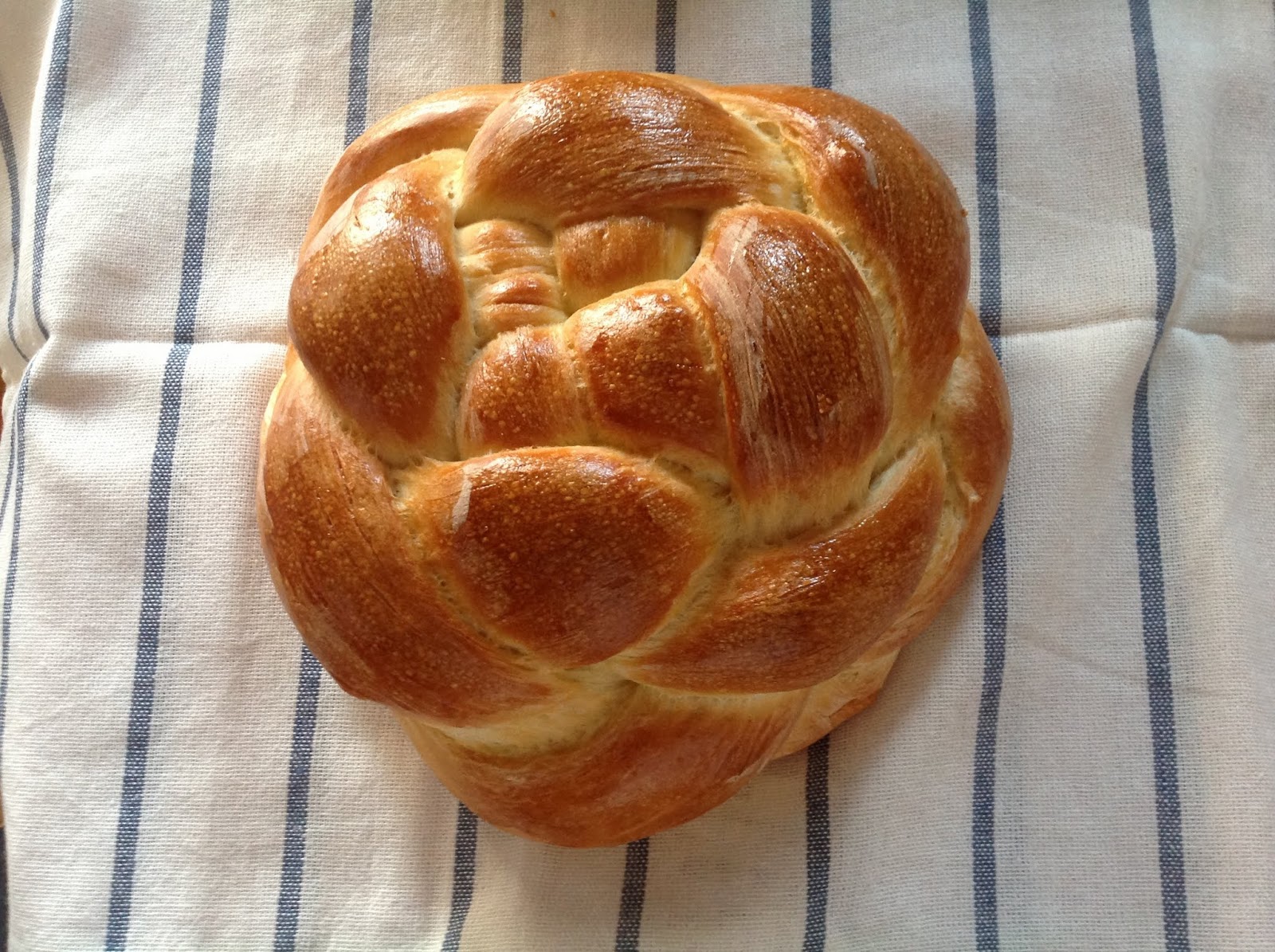 |
| Holiday Challah |
Thursday, July 4, 2013
By: Jason
Dear my fellow American friends and family,
Happy 4th of July!
I hope between all the beer, BBQs, social gatherings and fireworks, you have a small moment to think about how lucky we are to have been born into, and be living in, a free and open country and society.
Most of the world is not that lucky -- the recent events in Egypt and Syria do much more to point that out. Having been recently to Cairo, and within a stone's throw of Syria, it becomes very real how essential it is to have your ideals, thoughts, feelings, and wishes be heard -- something we, as Americans, take for granted, but wasn't always that way. Lots of people died for our causes and wishes, and if they could see our country today, I think many of them would be proud (OK, maybe frustrated but still, proud!).
That is why this year July 4th feels a little more like Thanksgiving to me. Keep that in mind but do not forget to PARTY. I certainly will at the U.S. Ambassador's House in Tel-Aviv, should be interesting...
Happy 4th and enjoy summer!
 |
| Fireworks in Tahrir Square (credit: bbc.co.uk) |
Tuesday, February 26, 2013
By: Rebecca
This past weekend was Purim. Purim is much like Mardi Gras and Halloween rolled into one. Really, Purim commemorates a time when the Jewish people living in Persia were saved from extermination. The story is told in the book of Esther, who saved the Jewish people (along with her cousin Mordechai) by revealing to the King of Persia that Haman (advisor to the King) was planning to exterminate all the Jews. Haman was hanged, the Jewish people were saved and Esther was a heroine.
The Megillah (the book of Esther) reading is a raucous event. Every time Haman's name is mentioned, people make noise to drown it out. We decided to go to a Megillah reading in Gan Ha'em, one of Haifa's large parks. The park was completely full of kids (and adults) in all kinds of costumes. There were games to play, food vendors, and live music.
The reading was supposed to be at 10:00, but no one showed up because the announcement was made over loud music. They ended up reading just a few verses on the stage and we thought, "that's it?" We decided to wander around a bit and after a few minutes, stumbled upon the same man reading the Megillah to a handful of people on some benches in the park. There were all sorts of things going on around him (a drum circle, a carousel with music, kids playing hopscotch, etc.), but somehow he managed to read the entire scroll through all the chaos.
Halfway through we were handed a tambourine by a women dressed as "Super Storm Sandy". Turns out, Sandy (her real name) and her husband Issac live right next to the park. When the reading was over, they invited us for coffee and how could we refuse?
This past weekend was Purim. Purim is much like Mardi Gras and Halloween rolled into one. Really, Purim commemorates a time when the Jewish people living in Persia were saved from extermination. The story is told in the book of Esther, who saved the Jewish people (along with her cousin Mordechai) by revealing to the King of Persia that Haman (advisor to the King) was planning to exterminate all the Jews. Haman was hanged, the Jewish people were saved and Esther was a heroine.
The Megillah (the book of Esther) reading is a raucous event. Every time Haman's name is mentioned, people make noise to drown it out. We decided to go to a Megillah reading in Gan Ha'em, one of Haifa's large parks. The park was completely full of kids (and adults) in all kinds of costumes. There were games to play, food vendors, and live music.
The reading was supposed to be at 10:00, but no one showed up because the announcement was made over loud music. They ended up reading just a few verses on the stage and we thought, "that's it?" We decided to wander around a bit and after a few minutes, stumbled upon the same man reading the Megillah to a handful of people on some benches in the park. There were all sorts of things going on around him (a drum circle, a carousel with music, kids playing hopscotch, etc.), but somehow he managed to read the entire scroll through all the chaos.
 | |
| Megillah reading in Gan Ha'em |
Halfway through we were handed a tambourine by a women dressed as "Super Storm Sandy". Turns out, Sandy (her real name) and her husband Issac live right next to the park. When the reading was over, they invited us for coffee and how could we refuse?
 | |
| Jason and his tambourine |
That evening we were invited to a special Purim dinner, or Se'udah, at our friend Jeff's house. Jeff is one of the other Fulbrighters and he and his wife Abby and son Rafi live in Haifa as well. We had a great time and it was a great way to end the holiday.
In the spirit of the Purim tradition, we also attended a party that a friend was hosting in a village called Ein Hod (about 30 minutes outside of Haifa). This involved drinking, crazy costumes, and a midnight bus ride back to Haifa. If you want to know more, you'll just have to ask ;)
Subscribe to:
Posts (Atom)